notes on a novel by Julia Merican
In the height of teenage growing pains, I used to watch time-lapse videos of flowers blooming. Enchanted by the process of each petal unfurling, like a tendon being snapped, moving not with intention but inevitability. They start off jerky with the first few petals, then they do it all together. A detachment. Reaching towards an unknowable force (who we now know is the Sun), the folds extend and curl. Exposing, exposing, exposed. Uncertain if this was what they wanted, but they have no choice. They could only become.
What a painful process.
Then the movement settles with a breath. There it is. I admire the bloom. Along with millions of others who have watched these videos. We were all witnessing the accelerated process of growth just to see the peak form of a flower. It is beautiful.
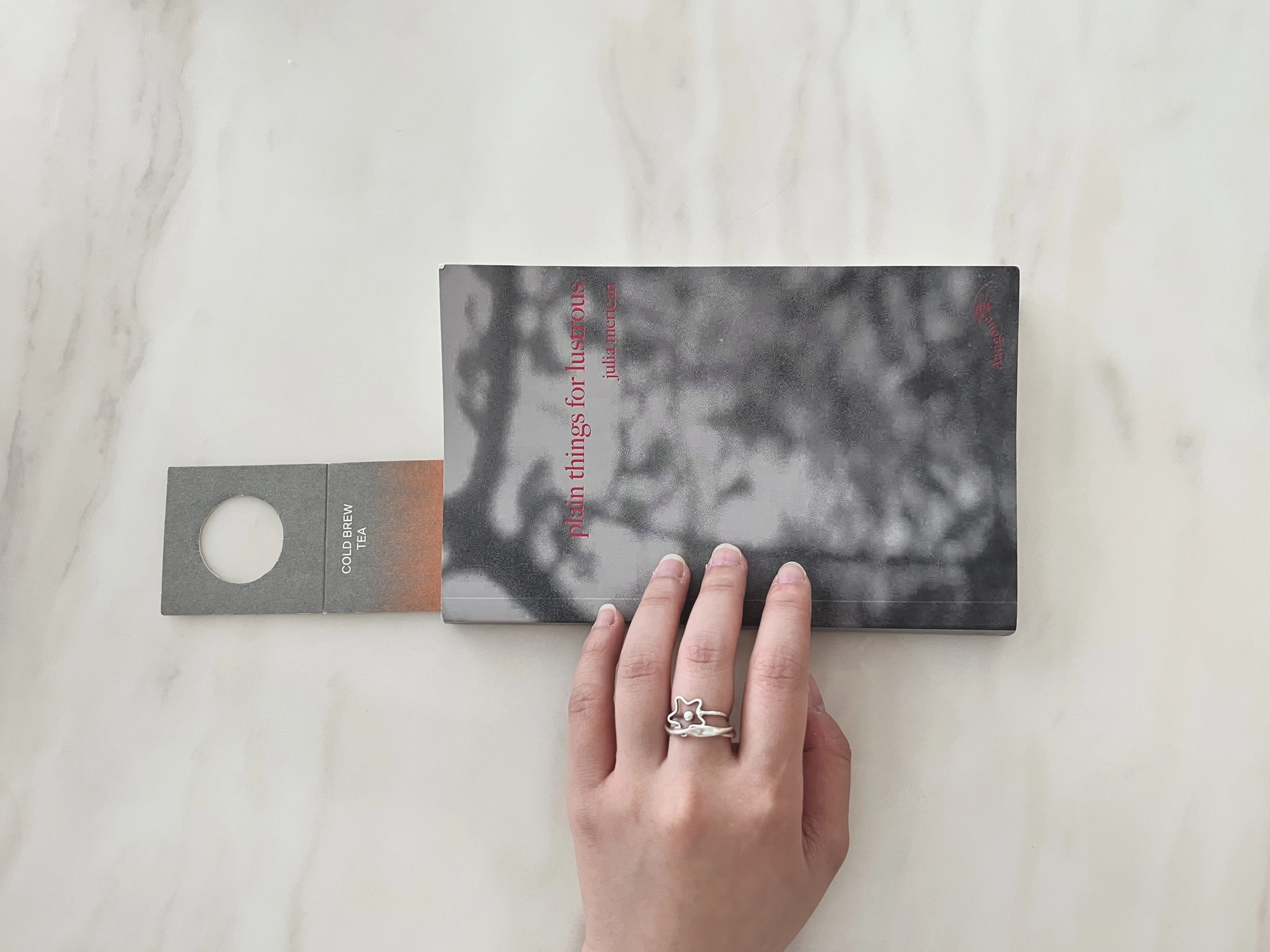
That was what it felt reading Julia Merican’s Plain Things for Lustrous. I couldn’t stop looking away, being swept away by strings of sentences, just like how a flower doesn’t decide to bloom. Every sentence penned with tender care. While the story takes place during a road trip between our two protagonists – daughter and father – the mom is ever present. So really, the story is constructing the portrait of a family with each interaction. It made me think about my own relationship with my parents. Parenthood changes a person, who will they become without it? It might not be productive to follow this line of questioning. The circumstances are set. So, I surrender myself to the encounter of knowing how these familiar strangers play out.
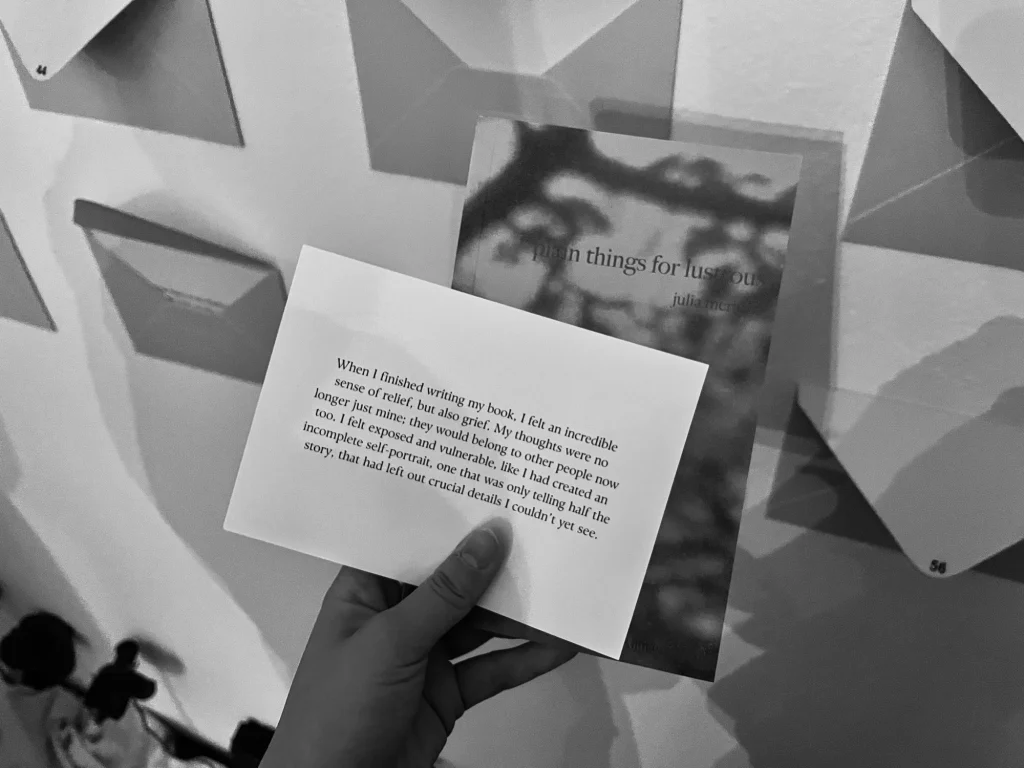
“When I finished writing my book, I felt an incredible sense of relief, but also grief. My thoughts were no longer just mine; they would belong to other people too. I felt exposed and vulnerable, like I had created an incomplete self-portrait, one that was only telling half the story, that had left out crucial details I couldn’t yet see.”
There was kaochim that correlated with numbered envelopes with curated book quotes on the wall. At the book launch, many were trying out their luck, finding their connected quote from the book. Decisions, choices, and luck, it seems for one evening, we are all bound by the same thread. My luck braided me with this quote. It’s a weird one, prior to reading the novella – it read like a confession from the author herself. How much of this is imagination? How much of this is lived? These questions have lit an appetite in me. I imagine a dreamy narrative, a pensive knot, right before it unravels.
Exploring “the luminous power of what we reveal and conceal in the stories we tell each other”, the story manages it so deliciously well. The position of a fiction reader can be a position of power, we know information the characters don’t, and we revel in satisfaction for having that omniscience even when it is to the author’s design. If the regular reader feels like a god, then the Plain Things reader feels like a voyeur. An eavesdropping participant sitting next to these two characters during their kopitiam visits. We only get to know what is being revealed, piece by piece. It made me think about how I construct my own identity within personal relationships. What labels do I use to introduce myself, what threads of information do I divulge? What feels the easiest may not be what feels true. To know someone else is to piece a puzzle and questions are the fragments of a whole. Sometimes these fragments resonate, as events in the daughter’s and father’s life overlap in coincidence. Or in fate. Can we run away? In a way, this reads like an adventure-puzzle game. The final goal being the developed picture of our dual protagonists, taken during a short road trip stint along familiar Southeast Asian coastlines.
Like the life cycle of flower beds, this book feels… cyclical. As if the passing of time won’t let it fade away but rather reveal new findings. Shapeshifting as your perspective changes. I can’t wait to get through this book a second time down the line and relive this road trip. Maybe if I become a parent. What happens then?
p.s…. brief notes on design: the red text on silver/grey cover, so enticingly dangerous. yummy! also noticed this pattern of double-spacing in typesetting instead of forcing the tracking, that was really interesting. i wonder if that was intentional? i read it between an invitation to pause & an interruption in thought.
Leave a Reply
You must be logged in to post a comment.